OpenAI Chip Debuts: Jalapeño Targets 50% Cheaper LLM Inference
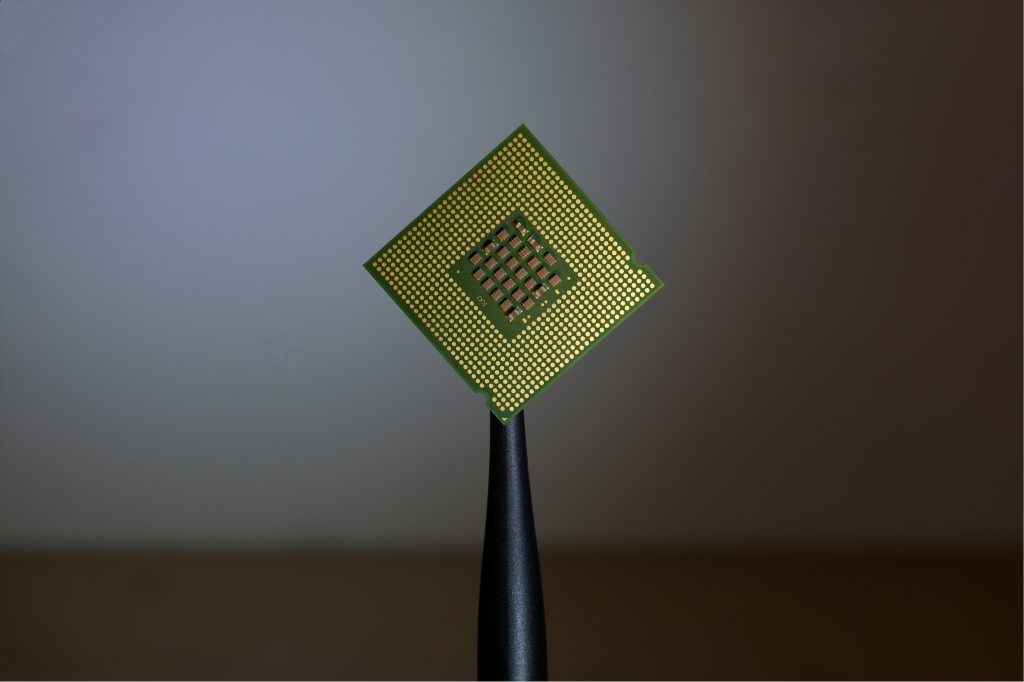
The long-rumored OpenAI chip is finally real: on June 24, OpenAI and Broadcom pulled the wraps off Jalapeño, a custom inference processor designed to run ChatGPT and other frontier models faster, cheaper, and with far less power than the Nvidia GPUs that power the AI boom today. It is OpenAI’s first piece of silicon, and the company is not being shy about the ambition behind it.
What the OpenAI chip Jalapeño actually is
Jalapeño is what OpenAI calls an “Intelligence Processor” — a reticle-sized ASIC architected from the ground up for large language model inference rather than the general-purpose training-and-everything workloads that GPUs handle. In plain terms, this is a chip that does one job extremely well: serving answers from already-trained models to the hundreds of millions of people who type into ChatGPT every week.
According to the companies, the architecture was optimized around the specific kernels, memory movement, networking, and serving patterns that matter most for OpenAI’s models. That narrow focus is the whole point. By stripping out everything inference does not need, the OpenAI chip is designed to deliver performance-per-watt that is, in OpenAI’s words, “substantially better than current state-of-the-art.”
A nine-month sprint from idea to silicon
The most eye-catching claim is the timeline. OpenAI says it went from concept to a finished design in roughly nine months — what Broadcom describes as possibly the fastest advanced-ASIC development cycle ever achieved. Tellingly, OpenAI’s own models were used to accelerate the design work, compressing tasks that normally take chip teams years.
- Designed for LLM inference, not training
- Built on a massive, reticle-sized die
- Manufactured by Broadcom, with first deployments slated for late 2026
- Tuned for performance-per-watt over raw peak throughput
Why cheaper inference is the real prize
Training models grabs headlines, but inference is where the recurring bill lives. Every query, image, and line of generated code costs compute, and at OpenAI’s scale that adds up to staggering, ongoing expense. Independent reports peg Jalapeño’s goal at cutting inference costs by as much as 50% — a number that, if it holds, reshapes the economics of running AI at scale. You can read the official details in OpenAI and Broadcom’s joint announcement.
Cheaper inference also unlocks behavior OpenAI wants to encourage: longer reasoning chains, more agentic workflows, and bigger context windows that would be prohibitively expensive on rented GPUs.
The Nvidia question hanging over the OpenAI chip
Make no mistake — this is also a strategic play. By owning its own silicon, OpenAI loosens its dependence on Nvidia, whose GPUs have been both the engine and the bottleneck of the AI era. Gigawatt-scale data center deployments with Microsoft and other partners are expected to begin rolling out through 2026, giving OpenAI a vertically integrated stack from model to metal. TechCrunch notes the move is part of CEO Sam Altman’s stated goal to “build the full stack.”
The bottom line
Jalapeño will not replace Nvidia overnight, and chips designed on paper still have to prove themselves in production. But the debut of the first OpenAI chip signals a clear shift: the company that defined the model layer now wants to own the hardware layer too. If the performance-per-watt and cost claims survive contact with real workloads, the ripple effects will be felt across every AI data center on the planet.
Related on DAILYSIM: Groq Funding: AI Chip Startup Raises $650 Million After Nvidia Talent Raid and OpenAI IPO Filing: Inside the Confidential S-1 and an $852 Billion Valuation.