World AI Conference Opens in Shanghai With 300 Global Debuts and Huawei’s Atlas 950
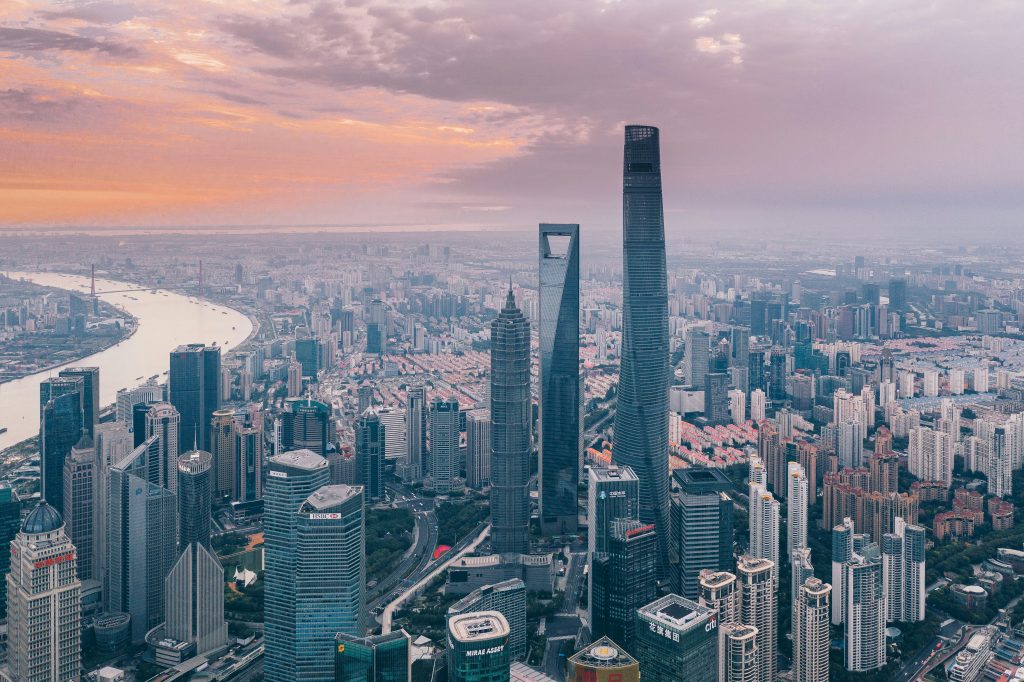
The World AI Conference opened in Shanghai on July 17, and by every measurable dimension it is the largest edition since the event launched in 2018. More than 300 AI products are making their global debut across 100,000 square meters of exhibition floor, and roughly 1,400 international guests are attending 140-plus theme forums running through July 20.
What the World AI Conference Is Actually Showing
The debut list is where the signal lives, and it is heavily weighted toward hardware and infrastructure rather than chatbots. The headline items announced ahead of the opening include:
- Huawei’s Atlas 950 — the physical unit on display, Huawei’s answer to Nvidia in the AI accelerator category.
- MiniMax M3 — a new multimodal large model from one of China’s more aggressive model labs.
- Jieyue Agent Operating System — an OS-layer play for agentic AI rather than an app-layer one.
- Near-memory computing 3D chips — an architecture bet aimed squarely at the memory bandwidth wall.
- The world’s first AI Agent smartphone — a category claim that will be tested quickly.
This year’s theme, “Intelligent partners, co-creating the future,” is doing the usual work of conference themes, which is to say not much. The exhibition list does more talking. According to Global Times reporting from the pre-conference briefing, organizers structured the event around six segments spanning forums, exhibitions, competitions, application experiences, incubation and recruitment.
The Governance Meeting Nobody Should Ignore
Running alongside the exhibition is the High-Level Meeting on Global AI Governance, and this is the part with consequences beyond the trade-show floor. China has spent the past two years positioning itself as the convener of an alternative AI governance track — one distinct from the EU’s regulatory model and from the US export-control regime.
The timing is not subtle. Beijing is hosting a governance summit in the same week that a Taiwanese foundry posted record profits fabricating chips that Chinese firms are largely barred from buying. The Atlas 950 sitting on the WAIC floor is the response to that constraint, made physical.
Why the Hardware Focus Matters
Western AI events over the past 18 months have been model-launch affairs: bigger context windows, better benchmarks, new reasoning modes. This World AI Conference is conspicuously about silicon, memory architecture and agent infrastructure.
That difference is a direct product of export controls. Cut off from the newest Nvidia parts, Chinese labs have been forced to optimize around a hardware ceiling — which produces exactly the kind of work now on display: near-memory computing to squeeze more from constrained bandwidth, domestic accelerators to replace what cannot be imported, and agent operating systems that extract more capability from smaller models. Meituan’s LongCat-2.0 trained on domestic chips was the proof of concept. WAIC 2026 is the product catalogue.
The Honest Caveats
Three things are worth holding in mind. First, a global debut at a trade show is a marketing event, not a shipping date; several of the 300 debuts will not reach volume production this year. Second, “world’s first” claims at WAIC have historically been generous, and the AI Agent smartphone label will get litigated within days. Third, the Atlas 950’s real benchmark is not its spec sheet but whether Chinese hyperscalers actually deploy it at scale over Nvidia alternatives they can still legally source.
What is not in doubt is the scale of the effort. A country that was widely written off as two generations behind in AI silicon is now staging the largest AI conference in the world and filling it with domestic hardware.
The Bottom Line
The World AI Conference is the clearest annual read on how far China’s AI stack has come under constraint, and this year’s edition suggests the answer is: further than the export-control thesis assumed. Whether the Atlas 950 and its cohort close the gap or merely narrow it is the question the next four days in Shanghai will start to answer.
Related on DAILYSIM: TSMC Profit Surges 77% to a Record as AI Chip Demand Fuels a $100 Billion Arizona Bet and LongCat-2.0: China’s Meituan Trains a 1.6-Trillion-Parameter AI on Domestic Chips.