AMD Helios Ships as Microsoft Becomes the First Hyperscaler to Deploy It at Scale
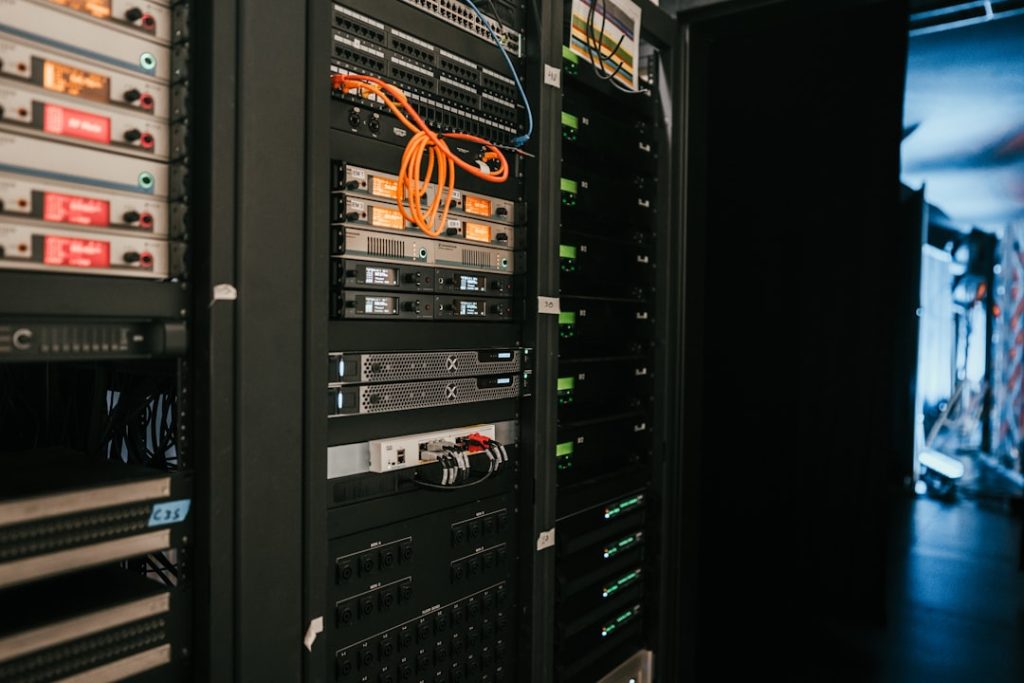
AMD Helios finally has a hyperscaler behind it. On July 20, AMD announced that Microsoft will deploy Helios — the company’s first rack-scale AI system — across Azure data centers, making the software giant the first major cloud provider to publicly commit to the platform at production scale. AMD shares jumped roughly 5% on the news.
For a company that has spent three years trying to convince the market it can do more than sell individual accelerators, this is the validation moment. Selling a GPU is one thing. Selling an entire rack — compute, CPUs, networking, cooling, and the software stack to run it — is the business Nvidia has spent a decade building a moat around.
What AMD Helios Actually Is
Helios is not a chip. It is a full rack, and the spec sheet is the point:
- 72 AMD Instinct MI455X GPUs in a single rack
- AMD EPYC “Venice” CPUs handling orchestration and host duties
- AMD Pensando networking tying the rack together
- Up to 2.9 exaFLOPS of FP4 compute and 1.4 exaFLOPS of FP8
- 31 TB of HBM4 memory — the number AMD is leaning on hardest
That memory figure is the strategic wedge. Frontier models and long-context inference workloads are increasingly bottlenecked on memory bandwidth and capacity rather than raw FLOPS, and AMD has consistently shipped more HBM per accelerator than its rival. Helios is engineered to turn that advantage into a rack-level pitch.
Why Microsoft Signing On Matters More Than the Specs
AMD already had names attached to Helios — Meta, OpenAI, Oracle, and Tata Consultancy Services have all indicated they will adopt it. But none of those is a hyperscaler committing to ramp the platform inside its own commercial cloud.
Microsoft says it will use Helios for frontier model inference, customer AI workloads, and Azure AI services. That last category is the meaningful one: it means the racks are not a research curiosity in a corner of a lab but infrastructure that paying Azure customers will run against. Per CNBC’s report on the AMD Helios launch, volume deployments are expected in the second half of 2026.
It also fits a pattern Microsoft has been building all year: reduce single-vendor exposure wherever possible. The company has been pushing its in-house MAI models into Office, building out its own silicon programs, and now diversifying the accelerators underneath Azure. Nvidia is not being replaced — but it is, for the first time, being meaningfully second-sourced by its largest customers.
The Nvidia Problem Has Not Gone Away
The hard part was never the hardware. Nvidia’s durable advantage is CUDA and the fifteen years of tooling, kernels, and institutional muscle memory built on top of it. AMD’s ROCm has improved dramatically, and the major inference frameworks now support it reasonably well, but “reasonably well” is a different proposition from “the default.”
What has changed is the customers’ motivation. When accelerator supply is tight and margins on Nvidia racks are what they are, hyperscalers have an enormous financial incentive to make a second vendor work. That incentive, more than any benchmark, is what gets ROCm engineers hired.
What to Watch Next
Three things will tell us whether this is an inflection or a headline:
- Whether AMD discloses Helios revenue as a distinct line and how quickly it scales
- Whether Azure exposes Helios-backed instances to general availability rather than reserved capacity
- Whether any second hyperscaler — Google or AWS — follows within two quarters
The third is the real test. One hyperscaler is a hedge. Two is a market.
The Bottom Line
AMD Helios is the most credible rack-scale challenge Nvidia has faced, and landing Microsoft moves it from a roadmap promise to deployed infrastructure. It does not end Nvidia’s dominance — the software gap is still real and still wide. But the AI buildout has reached the scale where the largest buyers can no longer afford a single supplier, and AMD has finally shipped something they can actually buy.
Related on DAILYSIM: Meta Iris Chip Enters Production as Zuckerberg Races to Cut Nvidia Dependence and DeepSeek Valuation Hits $52 Billion as a Rare Filing Exposes China’s AI Crown Jewel.