China AI Buildout: Inside Beijing’s $295 Billion Plan to Wall Off Nvidia
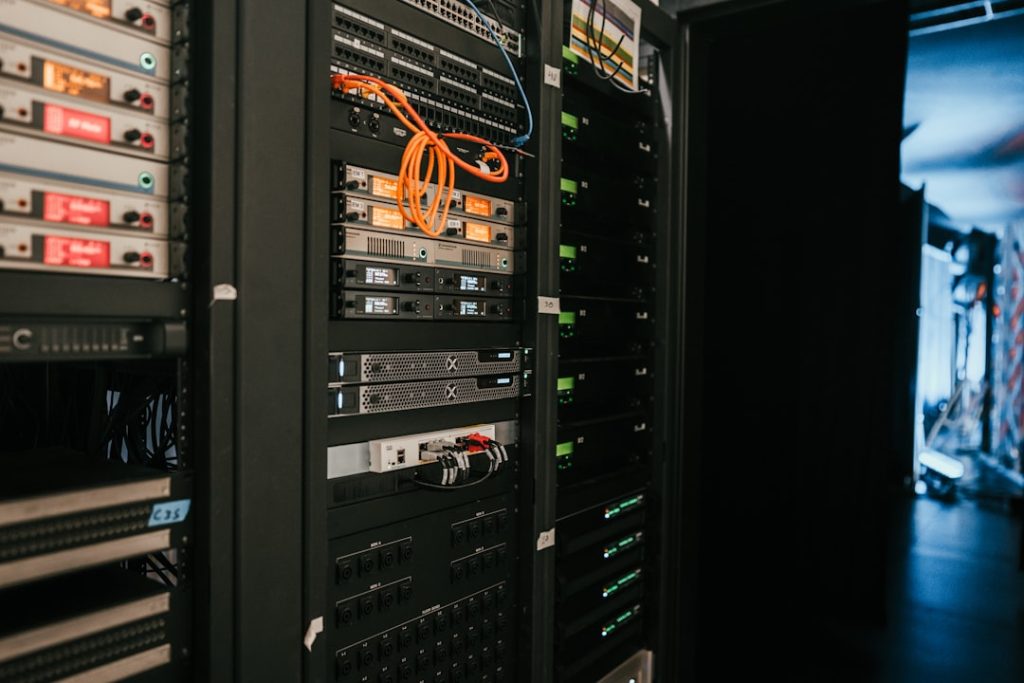
The China AI buildout just became official state policy: Beijing is preparing a roughly 2 trillion yuan ($295 billion) program to wire the country with a nationwide network of interconnected AI data centers, and the blueprint is engineered to squeeze U.S. chipmakers out of the picture almost entirely.
The five-year initiative, first reported by Bloomberg News, would route public money into compute capacity, power, and high-speed links on a scale few governments have ever attempted. It signals that the race for artificial intelligence supremacy is no longer just a contest between labs and hyperscalers — it is now a head-to-head between national industrial policies.
What the China AI Buildout Actually Funds
At the heart of the China AI buildout is a plan to construct and connect data centers across the country, operated largely by state-backed telecom giants. The roughly $295 billion figure covers publicly funded construction over five years — and notably excludes the separate, massive outlays of private players like Alibaba and Tencent.
- Operators: China Mobile and China Telecom would run and interconnect the bulk of the facilities.
- Suppliers: Domestic vendors, led by Huawei, are expected to provide at least 80% of the technology, including AI accelerator chips.
- Framework: The program is a pillar of Beijing’s broader “Six Networks” infrastructure push announced earlier this year.
- Goal: A self-sufficient compute layer that reduces reliance on U.S. chips and cloud services.
Locking Out Nvidia and AMD
The 80% domestic-content target is the detail that has rattled Wall Street and Silicon Valley alike. By mandating local hardware, the plan effectively forecloses the Chinese state-data-center market to Nvidia and AMD, the two companies whose accelerators power most of the world’s frontier AI. As Bloomberg News first reported, Beijing wants Huawei and other domestic suppliers to carry the load instead.
For Nvidia, China was once a meaningful slice of demand. A state-directed pivot to homegrown silicon accelerates a decoupling that export controls already set in motion — and it gives Huawei a guaranteed, government-funded customer base to scale its Ascend chip line.
How the Numbers Compare to U.S. AI Spending
The headline sum is enormous, but context matters. American tech giants such as Microsoft and Meta have collectively earmarked more than $700 billion for AI spending in 2026 alone. China’s $295 billion reflects only publicly funded construction, so the true gap between the two ecosystems is narrower than a side-by-side glance suggests once private Chinese capital is added in.
The strategic difference is coordination. Where U.S. spending is a patchwork of competing corporate bets, the China AI buildout is centrally planned — aligning compute, power, and supply chain behind a single national objective.
Why the China AI Buildout Matters
This is the clearest sign yet that AI infrastructure has become a matter of national security and industrial strategy, not just quarterly earnings. If the plan delivers, the world could split into two largely separate AI stacks: one built on U.S. chips and clouds, the other on Chinese silicon and state telecoms. That divergence would ripple through everything from model training costs to which standards the rest of the world adopts.
The buildout still faces real hurdles — domestic chips trail Nvidia’s best on performance, and wiring nationwide power and cooling at this scale is brutally hard. But the message from Beijing is unambiguous: it intends to own its compute layer end to end, and it is willing to spend like it.
Related on DAILYSIM: Alphabet’s $80 billion AI raise and SpaceX’s bet on AI data centers in orbit.