Microsoft Frontier Company: Inside the $2.5 Billion Bet on Forward-Deployed AI Engineers
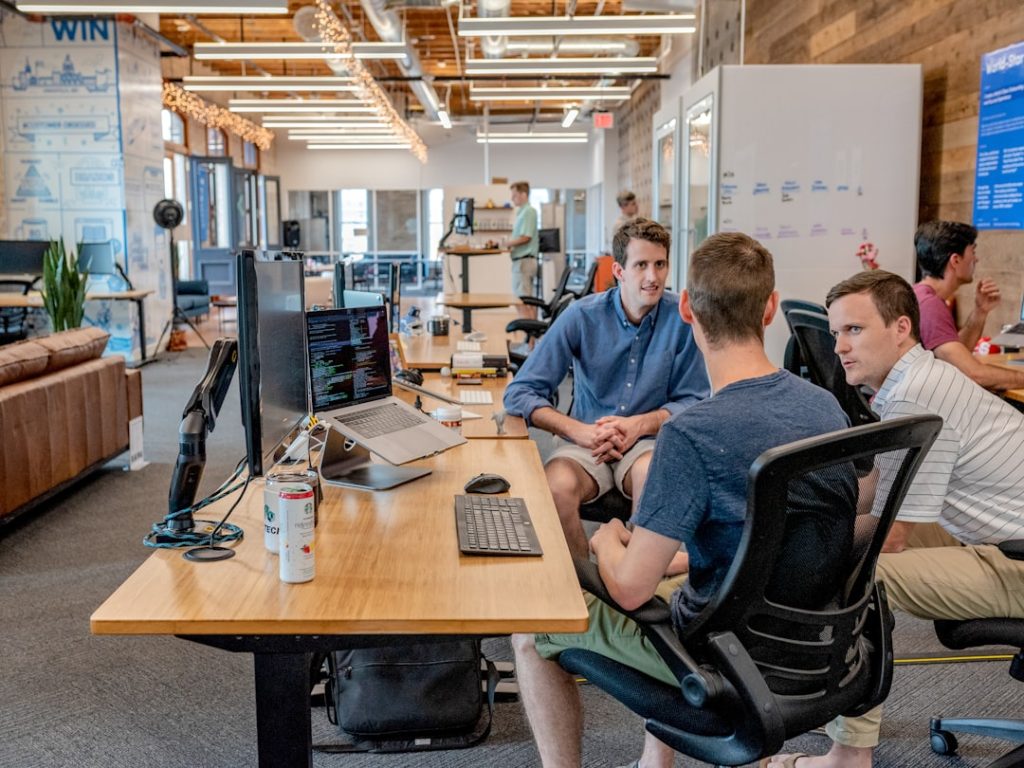
Microsoft Frontier Company is the clearest sign yet that the AI arms race has shifted from building bigger models to actually getting enterprises to use them. Unveiled on July 2, 2026 by Commercial Business CEO Judson Althoff, the new unit backs its ambitions with $2.5 billion in funding and roughly 6,000 engineers who will work directly inside client operations, a practice the industry calls forward-deployed engineering.
What Microsoft Frontier Company Actually Builds
Rather than another consulting arm bolted onto an existing sales org, Microsoft Frontier Company is being run as its own operating unit, led by Rodrigo Kede Lima, formerly president of Microsoft Asia. The pitch is simple: embed engineers who understand both a customer’s industry and Microsoft’s AI stack, then co-design, deploy, and continuously tune AI systems until they actually move the needle on revenue or cost. That is a marked departure from the “here’s an API, good luck” era of enterprise AI rollouts, where most pilots never made it past a proof of concept.
A $2.5 Billion Answer to AWS
The timing is not a coincidence. The launch lands just two days after AWS committed $1 billion to its own forward-deployed engineering push on June 30. Microsoft’s $2.5 billion figure more than doubles that number, making it, as TechCrunch reported, the largest single commitment to forward-deployed AI engineering from a major software vendor to date. It is a direct shot across the bow of every hyperscaler and AI lab that has realized selling model access is no longer enough; you have to help customers actually put it to work.
Early Customers Already Signed On
Microsoft says early partnerships already include the London Stock Exchange Group, Unilever, Land O’Lakes, and Accenture. Pairing with Accenture in particular is notable, since it turns a traditional systems-integrator partner into both a customer and a potential competitor for the same embedded-engineering work. For LSEG and Unilever, the appeal is straightforward: instead of hiring their own scarce AI talent, they get a Microsoft-funded team parachuted in to build and maintain production systems.
Why Forward-Deployed Engineering Is Suddenly Everywhere
Analysts have spent much of 2026 pointing out an awkward gap: enterprises have spent billions on AI licenses and pilots, but relatively few have shipped systems that meaningfully change how their businesses run. Forward-deployed engineering is the industry’s answer to that gap, and it’s not just a Microsoft and AWS story. OpenAI, Anthropic, and Google have all been quietly staffing similar teams over the past year, betting that the next phase of competition is decided less by benchmark scores and more by who can turn a model into a working system inside a hospital, a bank, or a manufacturing line.
What Microsoft Frontier Company Means for the AI Market
For Microsoft, the move doubles down on a strategy it has used before: spend heavily up front to own the deployment layer, then reap the recurring Azure and Copilot revenue that follows once systems are embedded. For rivals, it raises the stakes considerably. A $2.5 billion, 6,000-person commitment is difficult to match without either deep pockets or a much narrower focus. It also puts pressure on smaller systems integrators and boutique AI consultancies, who now have to compete with a division that can subsidize its services with Microsoft’s core cloud margins.
The risk, of course, is execution. Forward-deployed engineering only works if the embedded teams actually deliver measurable results, and 6,000 engineers is a lot of people to manage consistently across industries as different as retail, finance, and agriculture. If Microsoft Frontier Company can show hard numbers from LSEG or Unilever within a year, expect the rest of the industry to follow even faster than it already has.
Related on DAILYSIM: AI Data Centers Get a $1.75 Billion Jolt: National Grid Buys Into Joulent and Qualcomm Tenstorrent Deal: Chipmaker in Talks for a $10 Billion AI Silicon Bet.